
TAPP is one of the two established laparoscopic approaches to inguinal hernia repair. Through small incisions, the surgeon enters the abdominal cavity, develops the preperitoneal plane behind the abdominal wall, places mesh to cover the weakened groin area, and closes the peritoneum over it.
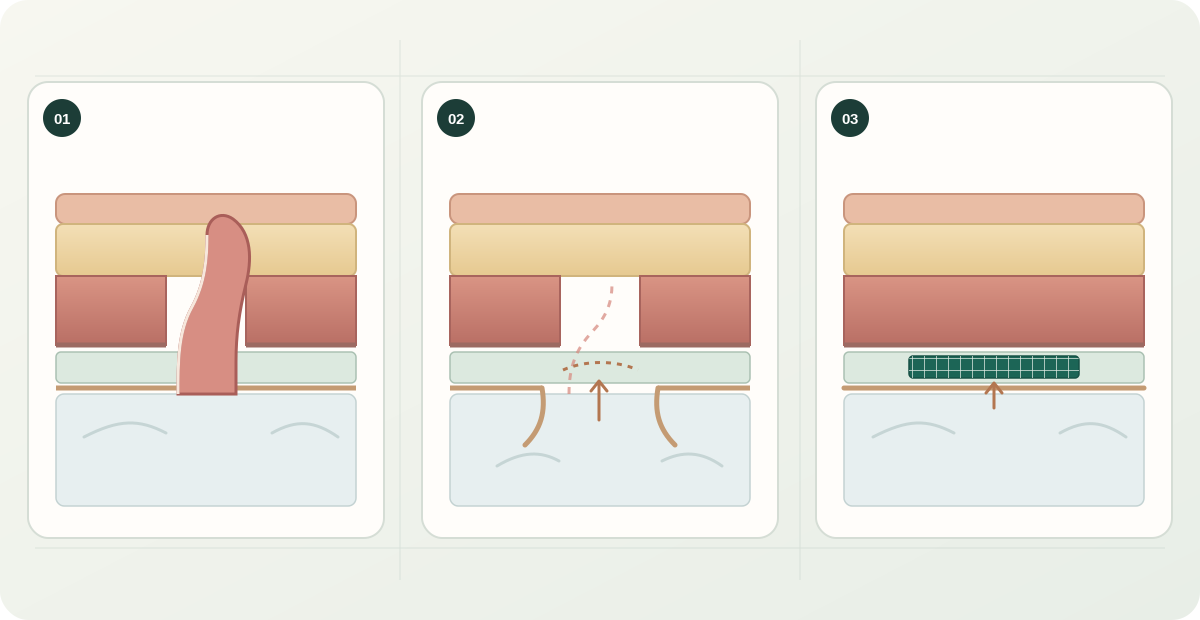
How is the operation performed?
-
Laparoscopic access and assessment
The operation is usually performed under general anaesthesia. A camera and instruments are introduced through small abdominal ports, and the groin is assessed. The opposite side may also be inspected when appropriate and in keeping with the pre-operative discussion and consent.
-
Opening the peritoneum and developing the plane
The surgeon opens a flap in the peritoneum to reach the space between the lining and the abdominal wall. The hernia sac is reduced, and the preperitoneal area is prepared for mesh placement.
-
Positioning the mesh over the weak area
A flat surgical mesh is placed in the preperitoneal plane to cover the hernia defect and the relevant weak areas of the groin. The surgeon selects the mesh and decides whether fixation is needed according to the anatomy and the individual case.
-
Closing the peritoneum and completing the repair
The peritoneal flap is closed over the mesh, separating it from the abdominal cavity. The instruments are removed and the small port sites are closed. The exact steps may vary according to the findings during surgery.
What does TAPP mean?
The abbreviation stands for Transabdominal Preperitoneal repair. Unlike an open operation that approaches the groin through a groin incision, TAPP views the area from inside the abdomen and places mesh behind the abdominal wall. The mesh is not intended to lie freely inside the abdominal cavity; it is placed in the preperitoneal plane and covered by the closed peritoneum.
Who may be considered for TAPP?
TAPP may be considered for selected primary or bilateral inguinal hernias, some recurrent hernias, and selected femoral hernias. A posterior approach may be useful when an inguinal hernia recurs after a previous anterior repair. The choice is never automatic: it depends on the hernia type and size, previous operations, the patient’s health, anaesthetic suitability, and the surgeon’s expertise and available resources.
What are the potential advantages?
The repair is performed through small ports rather than a larger groin incision and provides a posterior view of the weak area. When laparo-endoscopic repair is appropriate and performed by an experienced team, HerniaSurge guidance reports faster recovery and less chronic pain compared with open Lichtenstein repair. These are potential group-level benefits, not a guarantee for an individual patient.
Risks and considerations
As with any operation, possible complications include bleeding, infection, haematoma or seroma, urinary retention, persistent pain, or recurrence. Because TAPP enters the abdominal cavity, there are also rare risks of injury to the bowel, bladder or blood vessels, and a hernia at a port site. Previous lower abdominal or pelvic surgery, pelvic radiotherapy, or some large scrotal hernias may make another approach more appropriate. Your surgeon should explain the risks that apply to your circumstances before a decision is made.
TAPP or TEP?
Both techniques aim to place mesh in the same posterior preperitoneal plane. The main difference is access: TAPP enters the abdominal cavity and opens the peritoneum, whereas TEP develops the working space without entering the peritoneal cavity. The 2024 Cochrane review did not establish a clear overall advantage of either technique for serious complications or recurrence, and certainty was limited for many outcomes. The choice therefore depends on the case, the surgeon’s experience and the patient’s preferences after discussing alternatives.
How should you prepare?
The pre-operative assessment includes a review of your medical history, previous operations, medicines and allergies, as well as your suitability for anaesthesia. Tell the team about all medicines, especially blood thinners and diabetes medicines. Do not stop prescribed medication on your own; follow the surgeon’s and anaesthetist’s instructions about medicines and fasting.
Recovery after surgery
Temporary discomfort, tightness, bruising or swelling around the port sites or groin may occur. Gentle walking is usually encouraged once the clinical team considers it safe, with activity increased gradually according to recovery and the surgeon’s advice. Some patients go home on the same day, while others need observation or an overnight stay. There is no single return-to-work, exercise or lifting timetable that suits everyone.
When should you seek urgent medical review?
Seek urgent medical assessment for severe or worsening pain, persistent vomiting, a painful swelling that cannot be reduced, fever, increasing wound redness or discharge, significant difficulty passing urine, or rapidly increasing groin or scrotal swelling. Do not wait for a routine follow-up if concerning symptoms develop.
Frequently asked questions
Is mesh used in TAPP?
Yes. Standard TAPP repair uses a surgical mesh placed in the preperitoneal plane behind the abdominal wall. Your surgeon should discuss the type of mesh and its suitability with you before surgery.
Will both sides be repaired if the other side looks weak?
Not automatically. The opposite groin may be inspected during TAPP when appropriate, but repairing an occult or previously unsuspected hernia should be discussed and agreed as part of the consent process beforehand.
Does TAPP eliminate the risk of recurrence?
No operation can guarantee a zero risk of recurrence. The risk depends on the hernia, patient-related factors, the repair and follow-up.
Is TAPP always better than TEP or open surgery?
No. Each approach has advantages and considerations. The appropriate option is selected after assessing the patient, reviewing previous operations, discussing alternatives and considering the surgeon’s expertise.
Selected references
- European Hernia Society — HerniaSurge international guidelines overview ↗
- HerniaSurge — Update of the international guidelines for groin hernia management (2023) ↗
- Cochrane — TAPP versus TEP: evidence summary for patients (2024) ↗
- Andresen & Rosenberg — Cochrane Database of Systematic Reviews, CD004703 (2024) ↗