
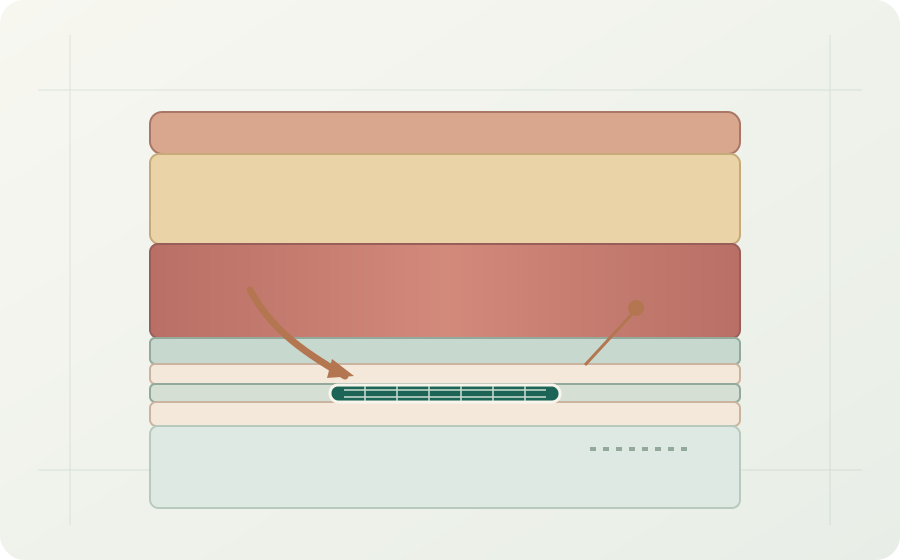
TEP is one of the two established laparo-endoscopic approaches to inguinal hernia repair. The surgeon develops a working space behind the abdominal wall and in front of the peritoneum, without intentionally entering the abdominal cavity, then places mesh in that plane to cover the groin’s weak areas.
How is the operation performed?
-
Accessing the preperitoneal plane
The operation is commonly performed under general anaesthesia. Through a small incision below the umbilicus or in the lower abdominal wall, the surgeon enters the preperitoneal plane and creates a working space. The exact access and port positions vary with the patient and the surgeon’s technique.
-
Developing the workspace and identifying the anatomy
The preperitoneal workspace is enlarged under laparoscopic vision and the important groin landmarks are identified. The peritoneum is intended to remain intact and the abdominal cavity is not deliberately opened; details depend on the anatomy and operative findings.
-
Reducing the hernia and preparing the mesh plane
The hernia sac is dissected and its contents are returned to their normal position when needed. The space behind the abdominal wall is then prepared so the relevant weak areas can be covered, with careful handling of the vessels, nerves and spermatic cord structures.
-
Positioning the mesh and completing the repair
A flat surgical mesh is placed in the preperitoneal plane to cover the hernia and the relevant weak areas of the groin. After its position is checked, the working-space pressure is released, the instruments are removed and the small incisions are closed. If a peritoneal tear occurs or a safe workspace cannot be maintained, the surgeon may need to adapt the plan or convert to TAPP or open repair.
What does TEP mean?
The abbreviation stands for Totally Extraperitoneal repair. This approach reaches the groin from behind the abdominal wall, in the plane in front of the peritoneal lining. Unlike TAPP, it does not require deliberate entry into the abdominal cavity or opening the peritoneum to reach the mesh plane.
Who may be considered for TEP?
TEP may be considered for selected inguinal hernias, including some primary, bilateral or recurrent cases. A posterior approach may be useful when a hernia recurs after a previous anterior repair. Selection depends on the hernia, previous lower abdominal or pelvic operations, general health, suitability for anaesthesia, the surgeon’s experience and available resources. Scarring, certain previous operations or a large scrotal hernia may make another approach more appropriate.
What are the potential advantages?
The operation uses small ports and allows posterior mesh repair in the preperitoneal plane. A defining feature is that it does not require deliberate entry into the abdominal cavity. When laparo-endoscopic repair is appropriate and performed by an experienced surgeon, HerniaSurge guidance indicates that these approaches overall may offer faster recovery and less chronic pain than open Lichtenstein repair. These are group-level findings, not a guarantee for an individual patient.
Considerations and limitations
Creating and maintaining the working space can be technically demanding, and TEP has a substantial learning curve. A peritoneal tear may allow gas to escape and compromise the workspace; it may require repair, a change of plan or conversion to TAPP or open surgery. Potential risks include bleeding or injury to blood vessels, the bladder, nerves or spermatic cord structures, as well as seroma or haematoma, urinary retention, persistent pain or recurrence. Risks vary with the patient and the team’s experience.
TEP or TAPP?
Both techniques aim to place mesh in the same posterior preperitoneal plane. The key difference is access: TEP develops the workspace outside the peritoneum without deliberately entering the abdominal cavity, whereas TAPP enters the cavity and opens the peritoneum to reach that same plane. Neither technique is best for every patient; the choice depends on anatomy, previous operations, the surgeon’s experience and the patient’s preferences after discussing alternatives.
How should you prepare?
The pre-operative assessment includes a review of your medical history, previous operations, medicines and allergies, as well as your suitability for anaesthesia. Tell the team about all medicines, especially blood thinners and diabetes medicines. Do not stop prescribed medication on your own; follow the surgeon’s and anaesthetist’s instructions about medicines and fasting.
Recovery after surgery
Temporary discomfort, tightness, bruising or swelling may occur around the port sites or groin, and a seroma may develop where the hernia was. Patients are generally encouraged to move and walk gradually when the clinical team permits, increasing activity according to recovery and the surgeon’s advice. Some patients go home the same day, while others need observation or an overnight stay. Return to work, sport and heavy lifting varies, so follow your individual recovery plan.
When should you seek medical help?
Seek urgent medical assessment for severe or worsening pain, persistent vomiting, a painful swelling that cannot be reduced, fever, increasing wound redness or discharge, or significant difficulty passing urine. Do not wait for a routine follow-up if concerning symptoms develop.
Frequently asked questions
Does TEP enter the abdominal cavity?
No. The defining principle is to create the working space outside the peritoneum without deliberately entering the abdominal cavity. A peritoneal tear can still occur during surgery, and the surgeon manages it according to the circumstances.
Is mesh used in TEP?
Yes. Standard TEP repair uses surgical mesh in the preperitoneal plane behind the abdominal wall to cover the relevant weak areas. Your surgeon should discuss the type of mesh and its suitability with you before surgery.
Is TEP better than TAPP?
Not necessarily. Current evidence suggests broadly similar results across many outcomes, with differences in some complications and conversion patterns. The choice depends on the individual case and the surgeon’s experience, not the technique name alone.
What happens if the peritoneum tears during TEP?
A tear may allow gas to escape and reduce the working space. The surgeon may be able to repair it or adapt the procedure; in some cases, conversion to TAPP or open surgery is the safer option.
Can TEP be performed after previous lower abdominal surgery?
Some previous operations or scars can make access to the preperitoneal plane more difficult, but they do not automatically rule out TEP in every case. The surgeon reviews the type and location of previous surgery and the examination before selecting the most appropriate approach.